
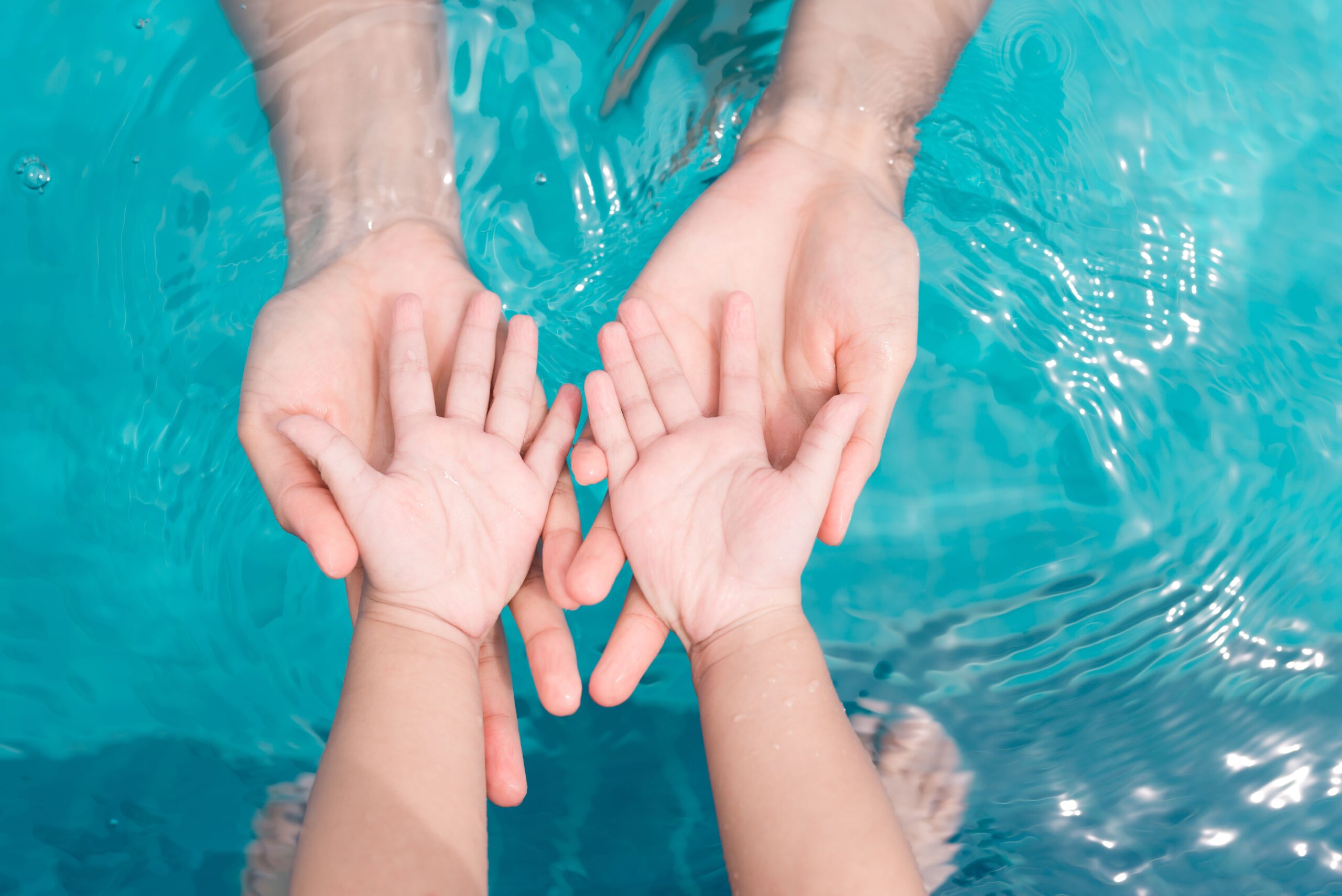
Drowning isn’t always fatal.
The impacts of drowning are a spectrum, just like choking. Have you ever tried to eat your food too fast, causing you to choke? Often times when this happens, we cough and sputter until we can catch our breath. A mild incident of non-fatal drowning is much the same.
We know it can be difficult to wrap your head around this. “Drowned” is often used synonymously with “dead” in the way that we speak and think. However, the reality is that there are far more non-fatal drownings than fatal drownings each year. A recent report suggests that for every fatal drowning in Ontario, there are nearly 4 non-fatal drownings, and because this statistic only captures drownings that resulted in emergency department visits and hospitalizations in Ontario, it is very likely that the true burden of non-fatal drownings is much higher (Ontario Non-Fatal Drowning Report, 2023).
A drowning incident occurs when your ability to breathe is interrupted because of water blocking the airway, either from submersion (your airway goes under the water) or immersion (a wave blocks your airway). In a mild incident, we cough, catch our breath, and have no long-term impacts on our ability to function. In moderate cases, we inhale water, struggle to get our breathing under control, and need to visit the hospital for assistance. In the most severe non-fatal cases, the lack of oxygen to the brain throughout the drowning event may lead to unconsciousness and can have lifelong impacts on our ability to function.
Any drowning event can lead to complications, and if help isn’t provided, can become fatal. Know the signs of delayed complications associated with non-fatal drowning to keep you and your loved ones safe. Seek medical attention when experiencing sustained difficulty breathing, shortness of breath, persistent coughing, and/or chest pain, especially within 24 hours of a close call in the water. Preventing non-fatal drownings is the first step to preventing fatal drownings, and prevention starts with you!
Stay safe when on, in, and around the water by engaging in safe behaviours.
- Wear your lifejacket;
- Always go swimming or boating with a buddy;
- Keep children close and actively supervised;
- Swim in lifeguard supervised areas;
- Learn first aid and be prepared for emergencies; and
- Always make sure that you are staying in areas that are safe for the activity you’re doing.
Water activities are the most fun when everyone stays safe!
See you out there,
Emma & Sebastien
P.S. Want to learn more about non-fatal drowning? Take a look at the Drowning Prevention Research Centre’s website: https://www.dprc-crpn.ca/non-fatal-drowning/
P.P.S. Are you a parent wanting to make sure your children stay safe this summer? Find some great information about being a Water Smart Parent at https://watersmartparents.ca/
